

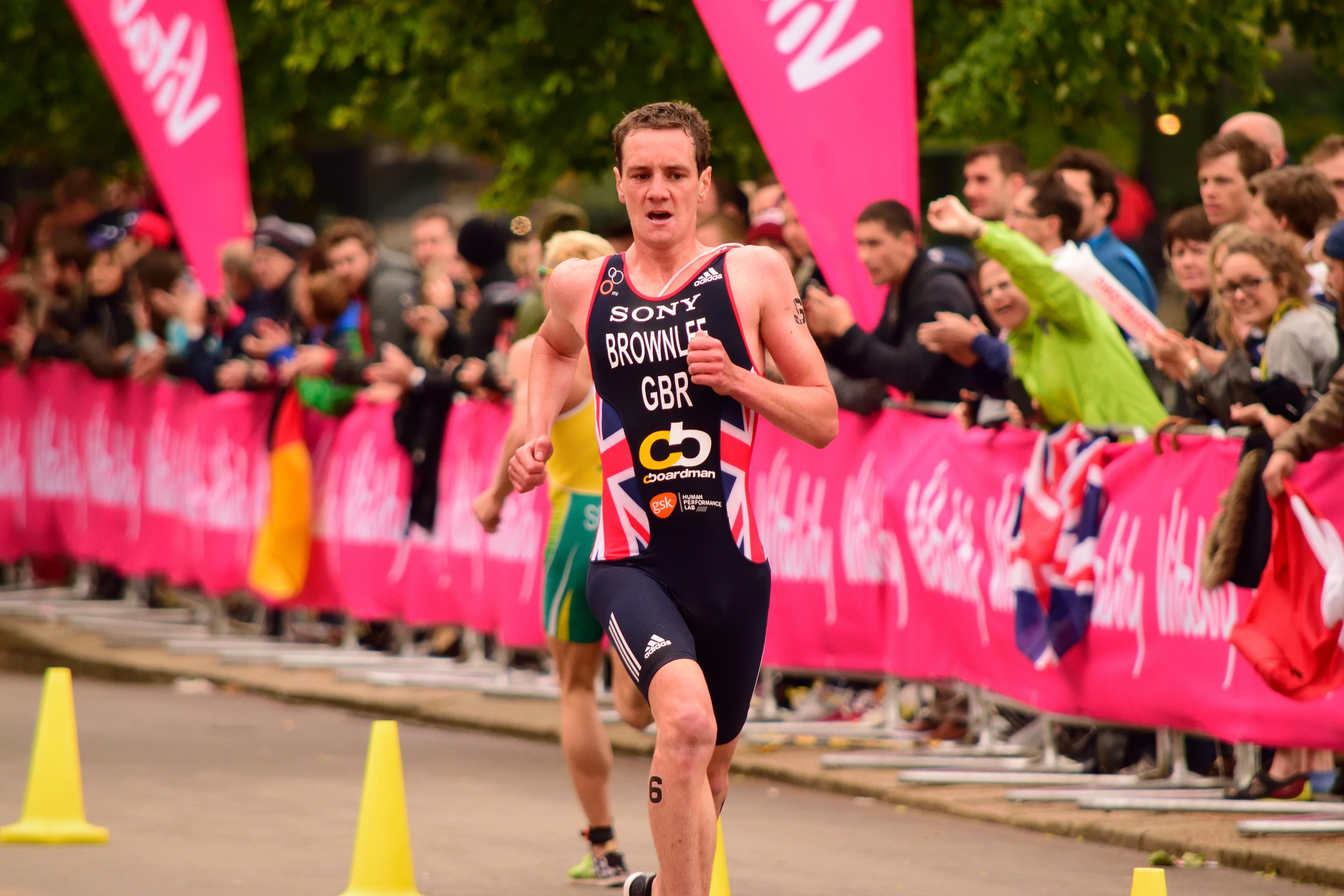
Alistair Brownlee in full flight! | Tina Williams/Alamy
Recently, while preparing for our conversation with two-time Olympic champion Alistair Brownlee on Mad Science Meets Real Life, I revisited a presentation that I saw a long time ago from his long-time coach Malcolm Brown.
What struck me about revisiting the presentation this time around, wasn’t that it contained some revolutionary training method or hidden physiological insight. In fact, the opposite. The further I got into it, the more I was reminded of a simple truth…
Most of the things that create elite endurance athletes aren’t particularly fancy or mysterious. In fact they’re quite simple. But even simple things can be really really difficult to execute for long enough to build a champion!
This is an important distinction because endurance sport, these days, has become fascinated with novelty. We’re constantly searching for the next breakthrough, the next training methodology, the next supplement, the next technological innovation. Yet, when you step back and actually look at, listen to, the development of athletes who have reached the very highest levels of the sport, their is a common “vibe” that emerges. You might have sensed it when listening to our podcast with Joel Filliol, coach of Olympic Champ, Simon Whitfield or our chat with Arild Tveiten, coach of another Olympic Champion - Kristian Blummenfelt, or maybe our chat with Johan Rojler, coach of another Olympic Champion - Nils van der Poel. And the vibe is this…
The athletes who become champions are rarely those who did something fancy, or discovered some ‘secret’ that nobody else knew. More often, they’re the athletes who became exceptionally good at patiently and progressively building their training volume over extraordinarily long periods of time.
This was the same vibe that I felt when I walked on deck at the Australian Institute of Sport for the very first time - a level of seriousness mixed with a reality that this is a long-term project that we’re all committed to - best settle in and get comfortable, we’re going to be here a while. And those same familiar feelings, those same lessons came up again when chatting with Alistair.
His story is not a story about an athlete who trained hard. Lots of athletes train hard. It is not simply a story about an athlete who laid down impressive workouts in Olympic years. Again, plenty of athletes lay down impressive workouts - at least sporadically. No, Alistair’s story is one of patience. It’s one of progressively building the volume over many years, while having a good time along the way. It’s one of an athlete who simply built a tremendous work capacity over many years that enabled him to do training that nobody else in the world was doing at the time. The key question. The question that you really want to answer in order to determine how Alistair became a multiple Olympic Champion, is how did he build himself into the kind of athlete who could absorb the training that he did?